Kitchens
Luxury Kitchen Design Trends in the UAE (2026)
Tojan TCD8 min read
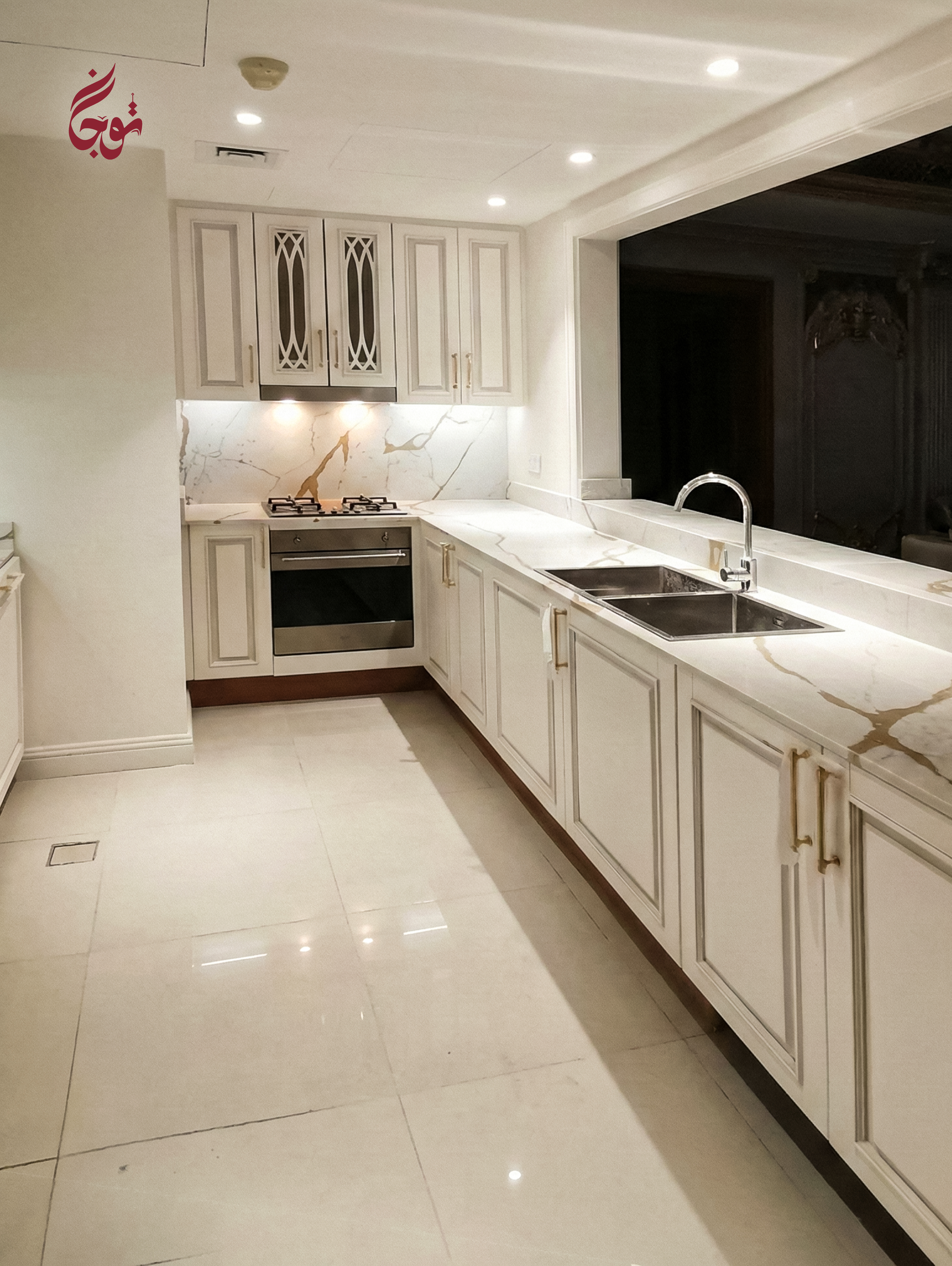
A luxury kitchen in the UAE has to do two jobs at once. It has to look quietly expensive when guests arrive, and it has to survive Abu Dhabi summers, hard tap water and a cooking culture that runs hot and aromatic. The kitchens we are building for 2026 reflect both realities: cleaner cabinet faces, warmer natural materials, smarter zoning between the show kitchen and the working kitchen, and finishes chosen specifically for humidity and heat. If you are planning a villa kitchen this year, here is where the market is genuinely moving, and what actually holds up in this climate. You can see how we approach it across our completed projects.
The handleless kitchen becomes the default, not the upgrade
For years the handleless kitchen was the premium option you paid extra for. In 2026 it is simply what a luxury kitchen UAE buyers expect. The flat, uninterrupted cabinet face reads as calm and modern, and it photographs beautifully in the open-plan villa layouts common across Abu Dhabi and Al Reem. There are two main ways to achieve it, and they behave differently in our climate.
- True push-to-open: no hardware at all, a gentle press releases the door. Clean look, but the mechanism needs quality hinges that tolerate humidity without sticking.
- J-pull (recessed grip rail): a routed channel along the top of the door gives you a grip without a handle. More forgiving day to day, and easier to clean than a magnetic push catch.
- Gola profile: a continuous aluminium channel between cabinets. Sleek, and the metal lip resists the daily wear that painted edges would show.
Our advice for busy family kitchens is J-pull on base units and push-to-open on tall and upper units, so the doors you touch most often never fight you.
Warm woods replace cold all-white
The all-white gloss kitchen has cooled off. The strongest direction for 2026 is warm natural timber paired with stone and matte paint, which suits the way light moves through UAE homes and softens the hard surfaces that AC-cooled rooms can otherwise feel like. Species and tone matter more than ever.
- Walnut for islands and tall feature runs, where its depth reads as genuinely luxurious.
- Oak in a light, raw-look finish for a calmer, Scandinavian-leaning palette that stays bright in north-facing rooms.
- Fluted and reeded timber fronts for islands and bar fronts, adding shadow and texture without colour.
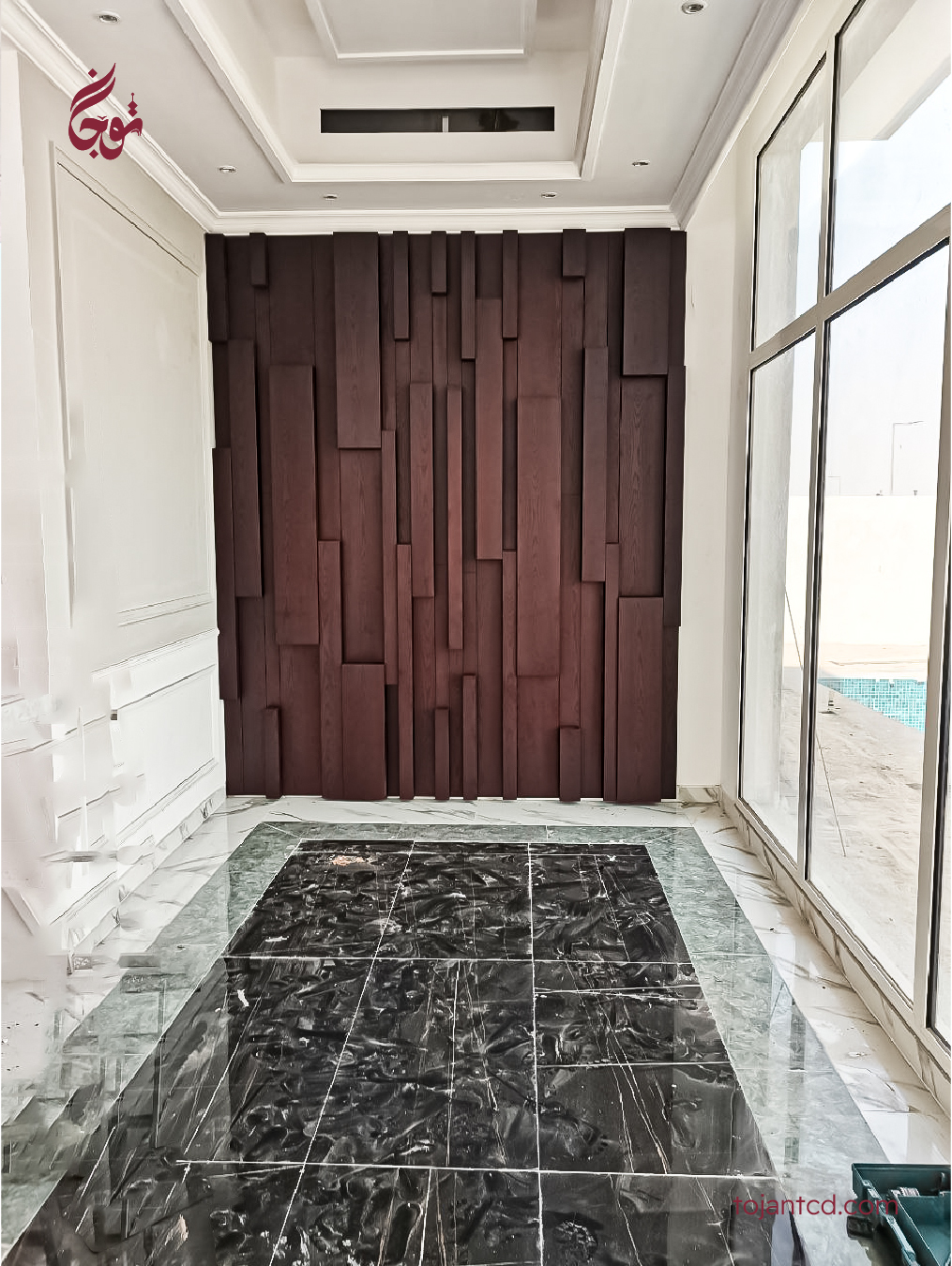
If you love the feel of timber elsewhere in the home, the same logic carries over to walls. We cover it in detail in our guide to wood wall paneling and feature walls.
Two kitchens in one: the show kitchen and the spice kitchen
This is the single most important UAE-specific trend, and it is now standard in serious villa briefs. Emirati and wider Gulf cooking produces intense aromas and heavy frying that you do not want drifting into an open-plan majlis or living area. The answer is a two-kitchen layout.
- The front kitchen is the showpiece: the island, the handleless cabinetry, the display, the coffee station. It stays pristine because the heavy work happens elsewhere.
- The back (wet or spice) kitchen is a separate, well-ventilated room for daily frying, grilling and prep, with industrial-grade extraction and easy-clean surfaces.
If your villa floor plan allows it, plan this split early. It protects your finishes, keeps the front kitchen looking new for years, and dramatically improves how the open-plan space smells when you are hosting.
Stone and surfaces that survive heat and hard water
Material choice in the UAE is not just aesthetic, it is engineering. Direct sun through villa glazing, hot pots, and notoriously hard tap water all attack the wrong surface fast. For 2026 we steer clients toward surfaces that look like natural stone but behave better.
- Sintered stone and porcelain slabs: highly heat resistant, UV stable so they will not fade near a sunny window, and non-porous so hard water leaves fewer marks.
- Quartz: still excellent for durability and stain resistance on most worktops, though keep it away from direct contact with very hot cookware.
- Honed natural marble: gorgeous on a feature island, but treat it as a material that will patina; seal it and accept the character, or keep it off the hardest-working zones.
A practical rule: use the most bulletproof surface on the working run, and save the dramatic veined marble for the island or backsplash where it is admired more than abused.
Hidden everything: pantries, appliances and the disappearing kitchen
The luxury look in 2026 is about what you do not see. Clutter is the enemy of a calm, expensive-feeling kitchen, so the design effort goes into hiding the working parts behind clean joinery.
- Walk-in or pocket-door pantries that swallow the small appliances, so the worktop stays empty.
- Integrated appliances behind matching cabinet fronts, so the fridge and dishwasher vanish into the run.
- Appliance garages with a roll-up or pocket door to keep the kettle and toaster out of sight but plugged in and ready.
Custom joinery is what makes this work. Off-the-shelf units rarely fit a UAE villa's exact wall lengths and ceiling heights, which is where bespoke cabinetry earns its place. See the full range on our services page.
Statement islands and the social kitchen
The island is now the centre of the home, not just a prep surface. For larger Abu Dhabi villas we are designing islands as social anchors: oversized waterfall stone, an integrated dining extension in timber, and concealed power for the way families actually gather and work in the kitchen.
- Waterfall ends in the same slab as the worktop for a solid, sculptural mass.
- A lower timber breakfast counter cantilevered off the island, warming the stone and giving casual seating.
- Deep drawers and built-in bins on the island so the working side stays tidy during entertaining.
The contrast of a cool stone top over a warm timber base is one of the most requested combinations of the year, and it ties the kitchen back to the joinery used elsewhere in the home.
Designing for AC, humidity and the UAE climate
This is where good kitchens separate from great ones. The materials and the build have to respect the local environment, or the most beautiful kitchen will warp, swell or discolour within a couple of seasons.
- Moisture-resistant cores: insist on moisture-resistant MDF or marine-grade substrates for any cabinetry near sinks, dishwashers and the spice kitchen.
- Acclimatised timber: solid wood and veneers should be allowed to acclimatise to the conditioned interior before installation, so they do not move once fitted.
- Stable interior climate: kitchens that swing between fierce outdoor heat and heavy AC stress joinery. Quality edge-banding and proper sealing keep edges from lifting.
- Ventilation and extraction: humidity plus frying equals grease film on cabinet faces, so plan extraction generously, especially in the working kitchen.
None of this shows in a render, but it is exactly what determines whether a kitchen still looks new in five years. It is also why we build to the conditions rather than importing a flat-pack designed for a European climate.
Lighting, colour and the quiet luxury palette
The loud, high-contrast kitchen is giving way to a quieter, layered palette for 2026. Think soft greiges, deep greens, warm taupes and natural wood, lit in a way that flatters both the stone and the food.
- Layered lighting: warm under-cabinet strips for the worktop, a statement pendant or two over the island, and dimmable ceiling light for mood.
- Warm metal accents: brushed brass and bronze taps and trims, used sparingly, read as far more expensive than chrome.
- Tonal, not loud: one rich colour on the cabinetry, balanced by natural stone and timber, rather than several competing finishes.
The same restraint defines the best majlis interiors, and the two spaces increasingly share a material language in open-plan villas. We explore that crossover in our piece on majlis interior design between heritage and modern.
Planning your custom kitchen in Abu Dhabi
A custom kitchen Abu Dhabi project runs more smoothly when you sequence the decisions correctly. Here is the order we recommend to clients.
- Confirm the layout and zoning first: single kitchen or show-plus-spice kitchen, and where the island sits.
- Lock the appliances early: their dimensions and ventilation needs drive the cabinetry, not the other way around.
- Choose surfaces for their working zone: bulletproof on the runs, statement stone on the island.
- Select cabinet style and timber: handleless profile, finish and the warm-wood accents.
- Detail the lighting and the hidden storage before fabrication, so the wiring and joinery are coordinated.
When you are ready to translate this into your own villa, we will measure, design and build to your exact space and climate. Request a quote and we will walk you through the options.
Frequently asked questions
Is a handleless kitchen practical for a busy family in the UAE?
Yes, with the right mechanism. We usually recommend a J-pull or gola recessed grip on the base units you open constantly, and push-to-open on tall and upper cabinets. That keeps the clean handleless look while avoiding the frustration of a push catch failing on the doors you use most. Quality hinges also matter in our humidity, so they keep moving smoothly.
Which worktop material is best for the UAE climate?
Sintered stone and porcelain slabs are the strongest all-round choice because they are heat resistant, UV stable so they will not fade near sunny windows, and non-porous so hard water leaves fewer marks. Quartz is excellent for most worktops. Natural marble is beautiful on a feature island but will patina over time, so we keep it off the hardest-working zones.
What is a spice kitchen and do I need one?
A spice kitchen, sometimes called a wet or back kitchen, is a separate well-ventilated room for heavy frying, grilling and daily prep, kept apart from the show kitchen. In open-plan UAE villas it is close to essential, because it stops cooking aromas and grease from reaching the living and majlis areas and keeps the front kitchen looking pristine.
How long does a custom kitchen in Abu Dhabi take to build?
It depends on the scope and finishes, but a bespoke kitchen typically runs several weeks from approved design through fabrication and installation, plus time for the timber to acclimatise and for stone templating. We give a clear timeline once the layout and materials are confirmed. You can start the conversation on our contact page.
Why choose custom cabinetry over imported flat-pack units?
UAE villas rarely match the standard dimensions of imported flat-pack kitchens, so you lose storage and end up with filler panels. Custom cabinetry fits your exact wall lengths and ceiling heights, hides appliances cleanly, and is built with moisture-resistant cores and acclimatised timber suited to local heat and AC. It looks better and lasts longer in this climate.
Planning a bespoke piece?
Tell us about your space and we'll turn it into something worth keeping.
Request a quote