Furniture
How to Choose the Right Wood for Custom Furniture in the UAE
Tojan TCD8 min read
Choosing the right wood is the single most important decision in any custom furniture project, and in the UAE it carries weight that most online guides ignore. Our climate swings from desert dryness to coastal humidity, our homes run on heavy air conditioning, and the gap between indoor and outdoor conditions is severe. A timber that behaves beautifully in a European workshop can warp, split or fade within a season inside an Abu Dhabi villa. This guide walks you through how we at Tojan TCD select wood for custom doors, furniture, kitchens and majlis interiors, what oak and walnut really offer, and how to make a choice that still looks flawless ten years from now.
Why Wood Choice Matters More in the UAE
Wood is a living material. It absorbs and releases moisture from the air long after the tree is cut, expanding and contracting with the seasons. In a temperate climate this movement is gentle. In the UAE it is dramatic. Outdoor humidity in coastal Abu Dhabi can exceed 80 percent in summer, while an air-conditioned interior held at 22 degrees may sit below 40 percent. A piece of furniture lives on the dry side of that divide, and every time a door opens or the AC cycles off, the wood feels it.
This is why imported flat-pack furniture so often fails here: panels were never acclimatised, joints were glued for a different climate, and finishes were not chosen to block moisture. Bespoke furniture, made and conditioned locally, behaves differently because the maker controls every variable. The starting point is the species itself.
Solid Hardwoods That Perform Well Here
For furniture meant to last generations, dense, stable hardwoods are the safest foundation. These species have tight grain and lower seasonal movement, which matters enormously in our climate.
- European oak — hard, forgiving and beautifully grained. It machines cleanly, takes stain and natural oils superbly, and is dimensionally stable once properly dried. Our default recommendation for dining tables, wardrobes and door frames.
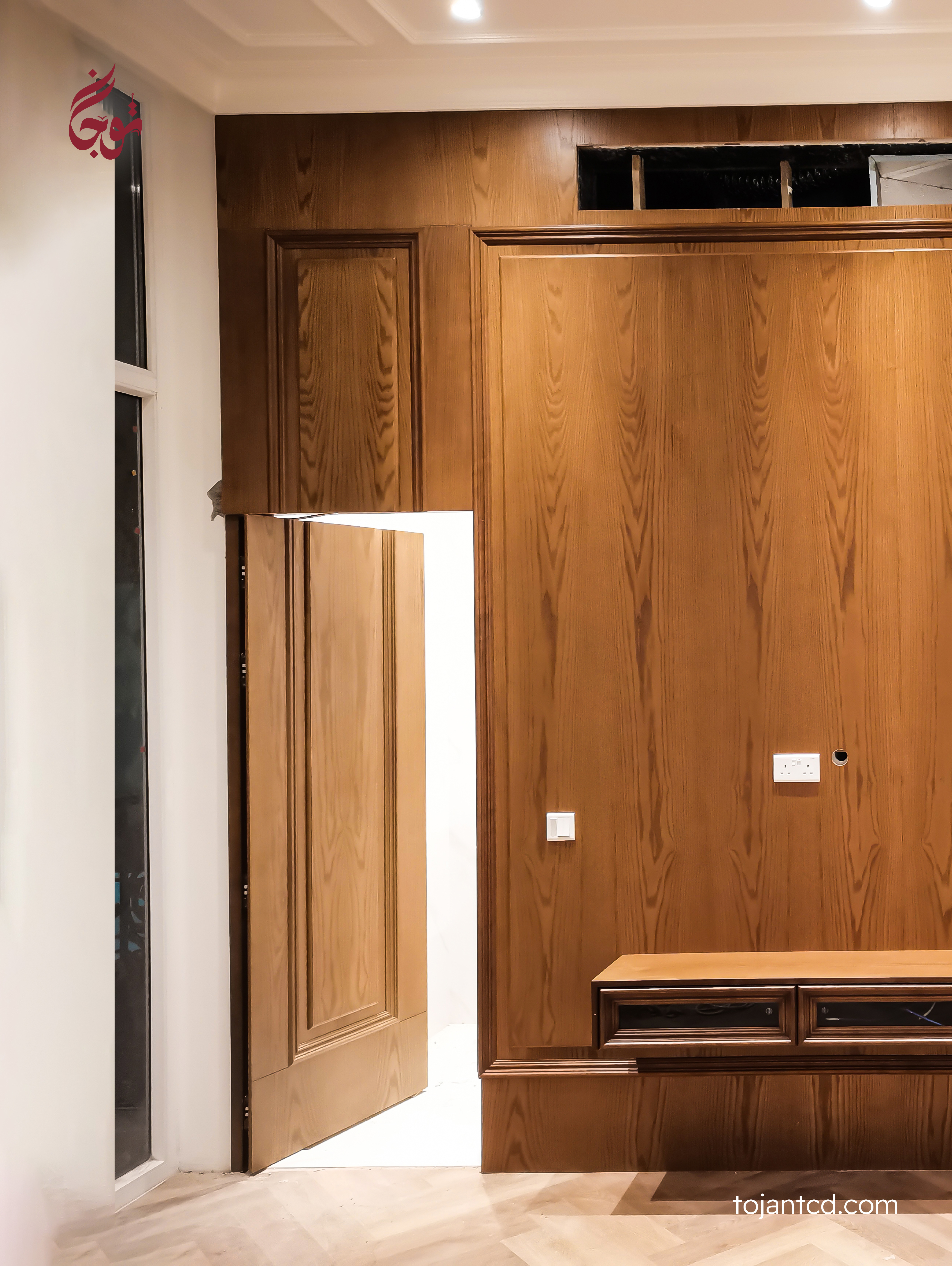
- American black walnut — softer than oak but richly coloured, with a depth that needs no stain. Ideal for statement pieces, feature cabinetry and majlis centrepieces where the wood itself is the luxury.
- Teak — naturally oily and rot-resistant, the right answer for anything near a kitchen, bathroom or shaded terrace.
- Maple and ash — pale, clean and strong, excellent for contemporary interiors and painted finishes.
You can see how we apply these across real homes in our completed projects, from solid oak majlis seating to walnut kitchen islands.
Oak vs Walnut: The Decision Most Clients Face
By far the most common question we hear is oak vs walnut. Both are premium, both are durable, but they suit different homes and temperaments. The right answer depends on your light, your colour palette and how you want the room to feel.
- Colour — oak runs from pale honey to warm amber and lightens a room; walnut is deep chocolate brown with purple and grey undertones that add gravity and intimacy.
- Hardness — oak is noticeably harder, so it resists dents and daily knocks better, which favours high-traffic surfaces and homes with children.
- Grain — oak has bold, open grain that reads as texture; walnut has a smoother, more flowing figure that photographs as quiet elegance.
- Cost — walnut typically costs more per cubic metre and is less abundant, so a full walnut kitchen sits at a higher tier than the same design in oak.
- Light — in bright, sun-filled Abu Dhabi interiors oak stays fresh and airy, while walnut can ground an over-lit room and balance large windows.
A frequent and elegant solution is to combine both: oak for the structural, hard-working surfaces and walnut for the feature panels, doors or a single island. If you are still weighing solid timber against engineered options, our companion guide on solid wood vs veneer vs MDF breaks down where each belongs.
Engineered Wood, Veneer and When They Are the Smart Choice
Solid hardwood is not always the right answer, and a good maker will tell you so. Wide, tall panels such as wardrobe doors and tall kitchen units are actually more stable in our climate when built on an engineered core and finished with a real wood veneer, because the core resists the cupping that a single wide solid board would suffer under AC dryness.
- Veneered MDF or plywood for large flat panels, carcasses and painted cabinetry, where stability beats solidity.
- Solid timber for edges, frames, legs, handles and anything that takes physical stress.
- A hybrid build for most luxury kitchens and wardrobes, combining a solid frame with veneered panels so the piece is both beautiful and dimensionally calm.
Quality veneer over a stable core is not a downgrade. It is often the more sophisticated engineering decision, and it lets us book-match grain across a wall of cabinetry in a way solid wood never could.
Matching Wood to the Room: Majlis, Kitchen, Wardrobes and Doors
Different rooms place different demands on timber. Choosing per zone rather than picking one wood for the whole villa produces a more refined and longer-lasting result.
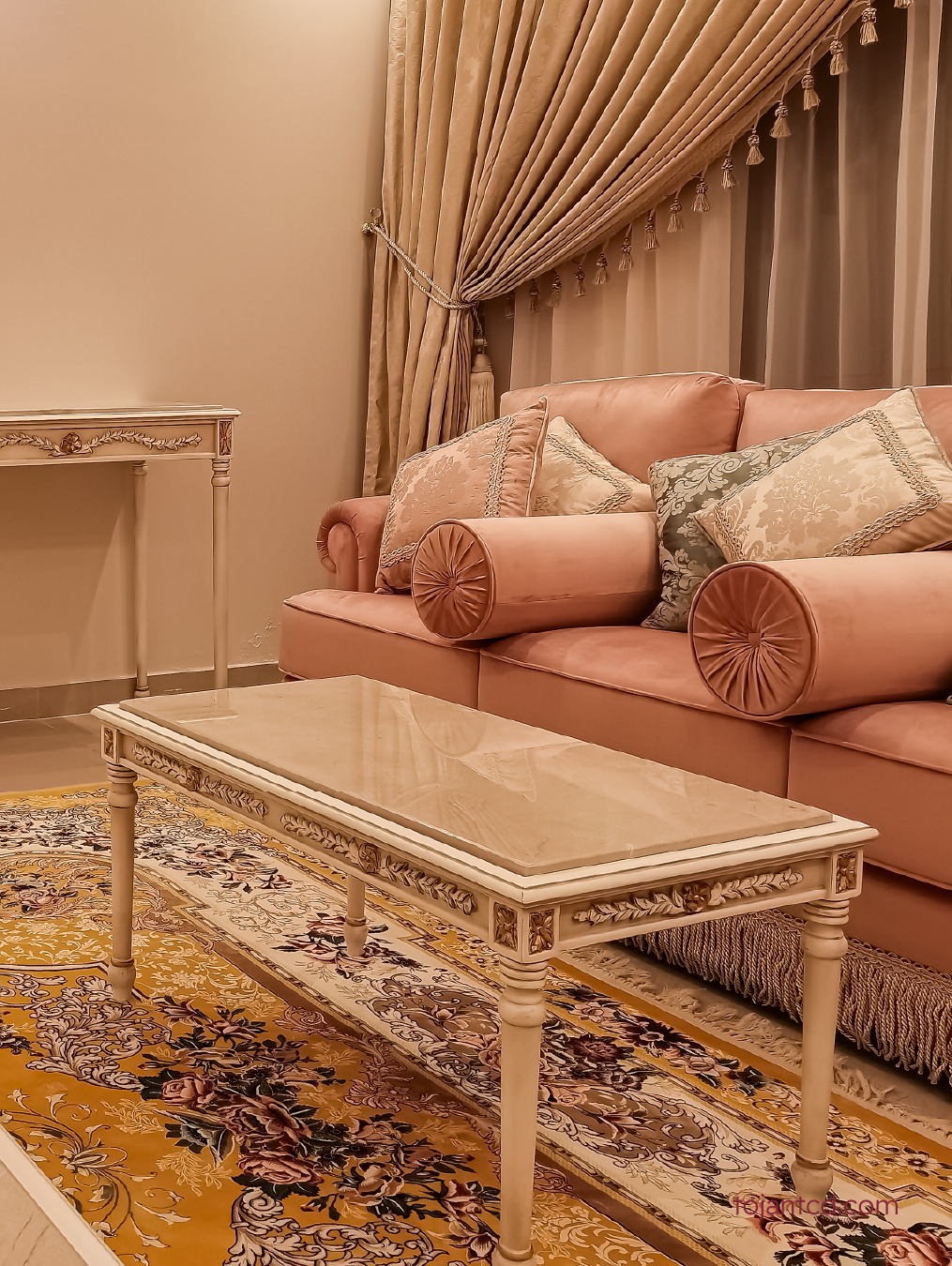
- Majlis — walnut or richly stained oak for low seating frames, side tables and wall panelling, with attention to how the wood reads under warm evening lighting.
- Kitchen — oak, teak or veneered cores with moisture-resistant finishes; avoid soft, porous species near sinks and hobs.
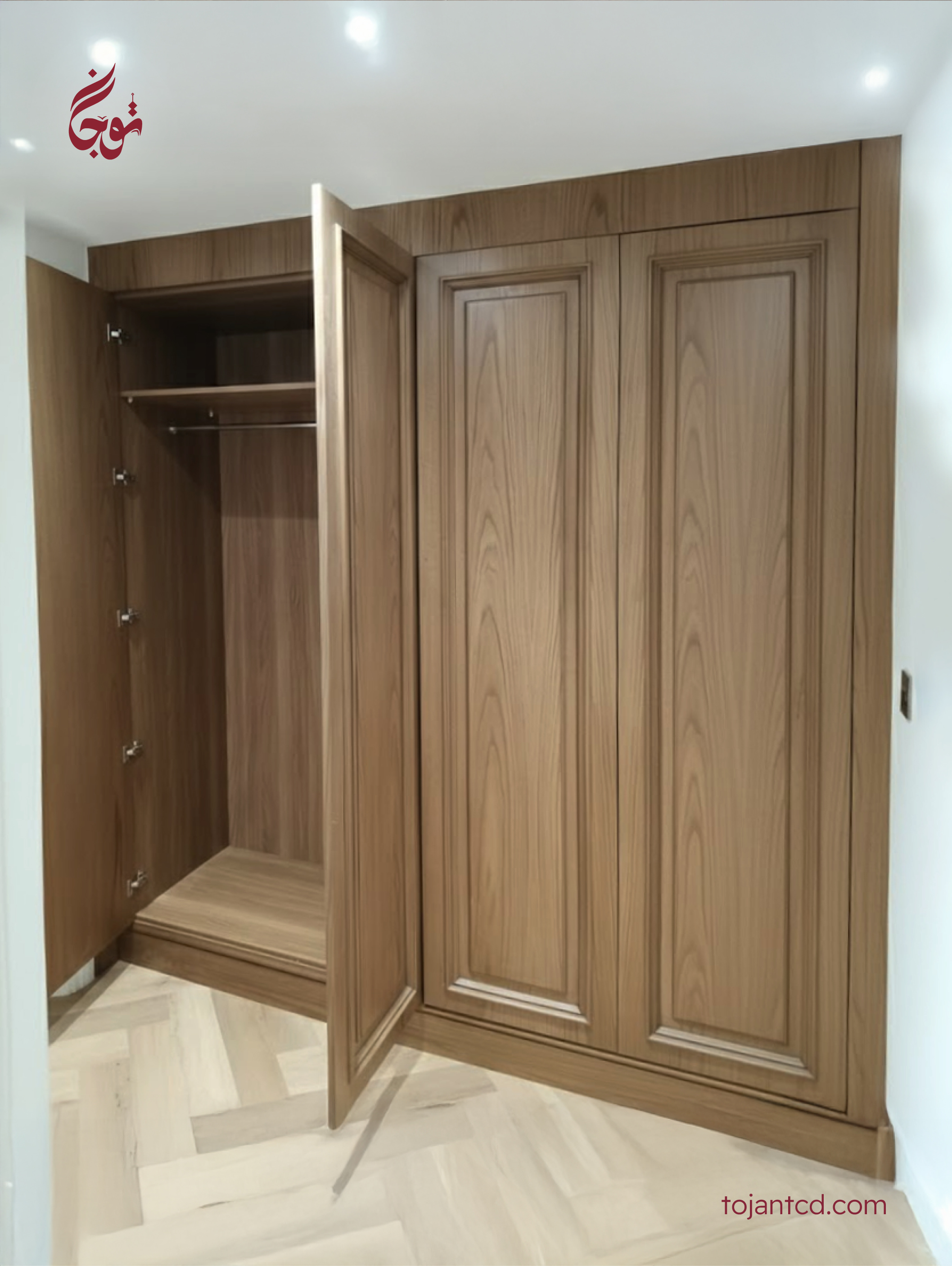
- Wardrobes and dressing rooms — engineered cores with veneer for tall doors, solid oak or walnut for frames and handles to keep movement controlled.
- Doors — engineered solid cores are essential for tall entry and internal doors, since a full solid slab will twist as humidity changes across its height.
The Climate Test: Humidity, AC and Coastal Air
Before we commit to a species we run every project through what we call the climate test. It is a simple set of questions that protects the piece for years.
- Is the room continuously air-conditioned, or does it sit empty and humid for parts of the year? Intermittent AC is the harshest condition of all, because the wood is forced to swing.
- How close is the home to the coast? Salt-laden air accelerates corrosion of fittings and demands more protective finishing.
- Will the piece see direct sun? UV fades walnut and ambers oak, so sun exposure changes both the species and the finish choice.
- Is there any contact with water or steam? That pushes the decision toward teak or fully sealed veneered cores.
The single most important step is acclimatisation. We condition timber in our Abu Dhabi workshop to the moisture level it will actually live at before a single joint is cut. Skipping this is the most common reason imported furniture fails locally.
Finishes That Protect Wood in This Climate
The finish is your wood's defence against humidity, UV and daily wear, and in the UAE it is not optional. The choice depends on the look you want and where the piece lives.
- Hardwax oil — natural, matte and repairable, it lets the grain breathe and is easy to touch up; ideal for tables and feature pieces away from constant water.
- Polyurethane lacquer — a tougher sealed film that resists moisture and scuffs, suited to kitchens, doors and high-traffic surfaces.
- UV-resistant topcoats — essential for any wood near large windows, slowing the colour shift that strong Gulf sunlight causes.
Whatever finish you choose, maintenance keeps it performing. Our guide on caring for wooden furniture in the UAE climate covers humidity control, cleaning and re-oiling in detail.
How to Specify Wood With Your Maker
When you brief a workshop, the more precisely you specify, the better the outcome. A vague request for an oak table invites a hundred interpretations. Use this checklist when you talk to us or any serious maker.
- Name the species and the grade, for example European oak, prime grade, with minimal knots.
- Confirm solid, veneer or hybrid construction for each major component.
- Agree the finish type and sheen level, and ask to see a sample on the actual wood.
- Ask how and where the timber is acclimatised before construction.
- Discuss how the piece should be maintained, and who handles re-oiling over time.
When you are ready to turn a brief into a real piece, request a quote from Tojan TCD and we will walk the species, finish and construction choices with you in person.
Frequently asked questions
Is oak or walnut better for furniture in the UAE?
Both perform well once properly dried and acclimatised. Oak is harder and more sun-stable, so it suits bright rooms and high-traffic surfaces; walnut is richer and more dramatic, ideal for statement pieces and majlis interiors. Many of our clients combine the two.
Will solid wood furniture crack because of air conditioning?
It can, if the timber was not conditioned to local moisture levels before construction. We acclimatise all wood in our Abu Dhabi workshop and use joinery that allows for movement, which is why locally made bespoke pieces outlast imported flat-pack furniture here.
Is veneer lower quality than solid wood?
No. Quality veneer over a stable engineered core is often the smarter choice for tall doors and wide panels, because it resists warping in our dry interiors. See our guide on solid wood vs veneer vs MDF for where each one belongs.
What wood is best for a kitchen in a humid coastal home?
Teak and well-sealed veneered cores handle moisture best, finished with polyurethane lacquer for water resistance. We steer clear of soft, porous species near sinks and hobs and recommend UV topcoats for any cabinetry near large windows.
How long does custom wooden furniture last in the UAE?
Properly specified and maintained, decades. The deciding factors are correct species selection, local acclimatisation, a protective finish suited to the room, and routine care such as re-oiling. Get those right and the piece will outlast most of the home around it.
Planning a bespoke piece?
Tell us about your space and we'll turn it into something worth keeping.
Request a quote