Doors
Custom Wooden Doors in Abu Dhabi: A Complete Buyer's Guide
Tojan TCD7 min read
A door is the first thing a guest touches and the last detail a homeowner notices, yet in Abu Dhabi villas it quietly does the hardest job in the house: holding the line between fierce desert heat and a cool, controlled interior. Choosing custom wooden doors here is not the same as ordering off a showroom rack. The right slab, the right core and the right finish will stay flat and quiet for decades; the wrong ones warp, crack or stick within a single summer. This guide walks you through everything a serious buyer in the UAE should weigh before commissioning bespoke doors UAE craftsmen can deliver with confidence.
Why custom wooden doors make sense in Abu Dhabi
Standard mass-produced doors are built to one generic size and one generic climate. Abu Dhabi gives you neither. Villa entrances run tall, majlis openings are often wider than usual, and the swing between 45 degree outdoor heat and 22 degree air conditioning puts stress on timber that a factory door was never engineered for. Commissioning custom wooden doors Abu Dhabi homeowners can rely on means the slab is sized to your opening, the core is built for thermal stability, and the finish is chosen for UV and humidity exposure.
Bespoke also lets the door speak the language of the rest of your home. A carved entrance can echo Islamic geometry, a wide pivot door can suit a contemporary villa in Saadiyat, and a quieter flush panel can disappear into a minimalist interior. You can see how this plays out across real homes in our recent projects.
Choosing the right wood species for the climate
Wood selection is the single most important decision you will make, because it determines how the door behaves once your AC starts cycling. Dense, stable hardwoods resist the constant expansion and contraction caused by moving between hot exteriors and cooled interiors. Softer, cheaper timbers move more and are far more likely to telegraph cracks through the finish.
- American walnut — rich, dark and dimensionally stable, ideal for statement entrances and luxury interiors.
- Oak — hard, durable and forgiving, with a grain that takes both light and dark finishes beautifully.
- Teak — naturally oily and weather resistant, the classic choice for exterior doors exposed to sun and the occasional coastal humidity.
- Sapele and iroko — strong African hardwoods often used as a more affordable alternative to teak for solid wood doors that face outdoors.
For deeper guidance on matching species to use, read our companion article on choosing wood for custom furniture in the UAE, which covers many of the same stability principles that apply to doors.
Solid wood, engineered core, or veneer?
Buyers often assume a door is either solid timber or a hollow imitation, but the best results in this climate usually come from a smarter middle path. Understanding the three constructions helps you spend where it matters.
- Solid wood doors are milled from full timber boards. They feel substantial and can be sanded and refinished for life, but they need a skilled maker to control movement, and they carry the highest material cost.
- Engineered core doors use a stable laminated or stave core wrapped in a thick hardwood layer. They resist warping in fluctuating AC conditions better than many solid slabs, which is why they are popular for tall villa entrances.
- Veneered doors apply a thin slice of premium wood over a stable substrate. This gives you flawless grain matching at a lower price, ideal for a run of matching interior doors.
A reputable maker will often recommend an engineered core with a solid hardwood face for exterior use, giving you the look and longevity of solid timber without the warping risk that pure slabs face in this climate.
Door styles: pivot, hinged, carved and flush
The style you choose sets the tone for the whole entrance and affects hardware, cost and structural requirements.
- Pivot doors rotate on a floor and ceiling spindle rather than side hinges, allowing very large, heavy slabs to open with a light touch. A pivot door is the signature move for modern Abu Dhabi villa entrances and makes a striking first impression.
- Hinged doors remain the practical standard for most interior and many exterior openings, and they work with the widest range of frames and locks.
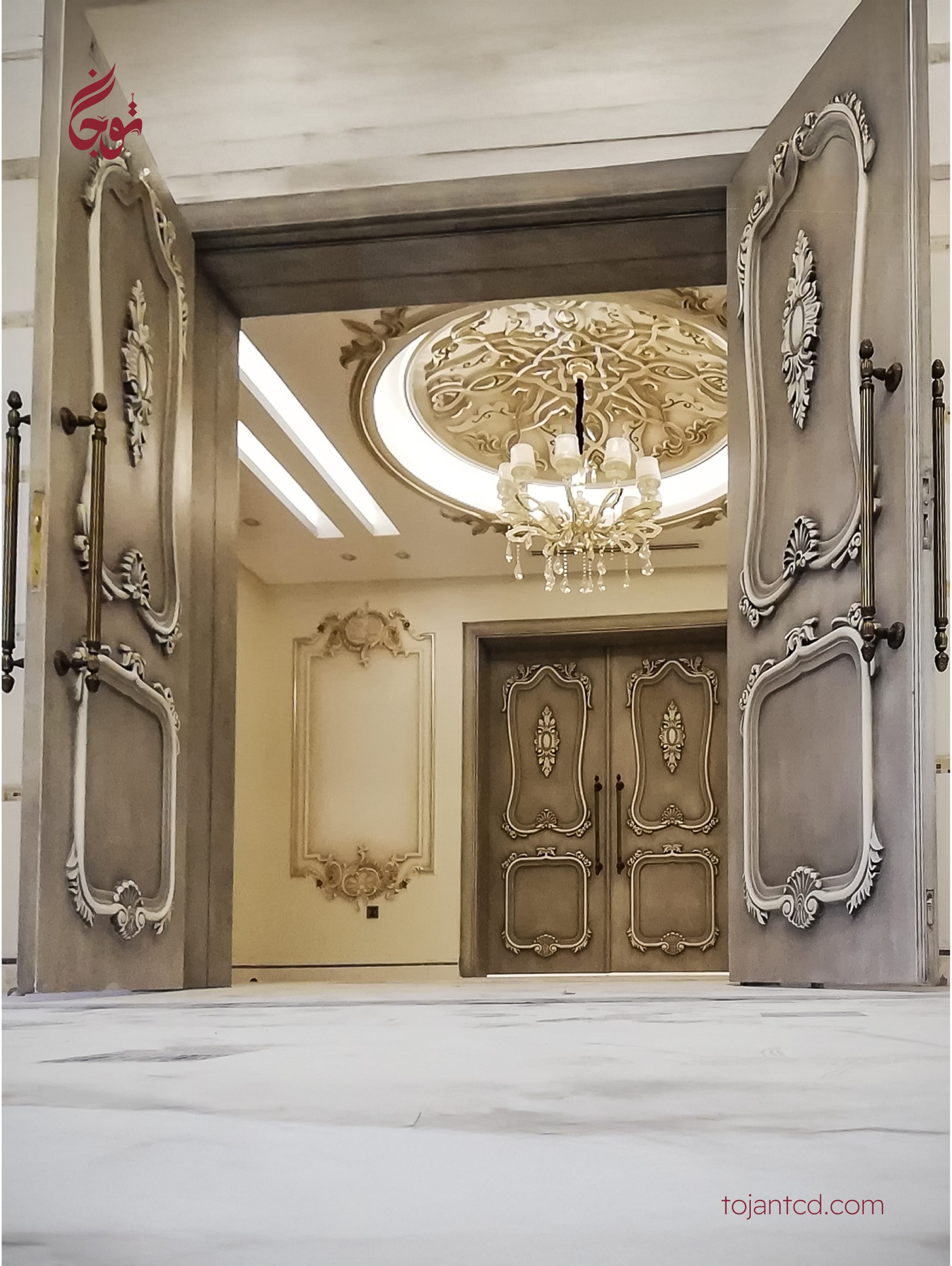
- Carved doors bring craftsmanship to the surface through hand or CNC relief work, often used for majlis and main entrances where heritage and detail matter.
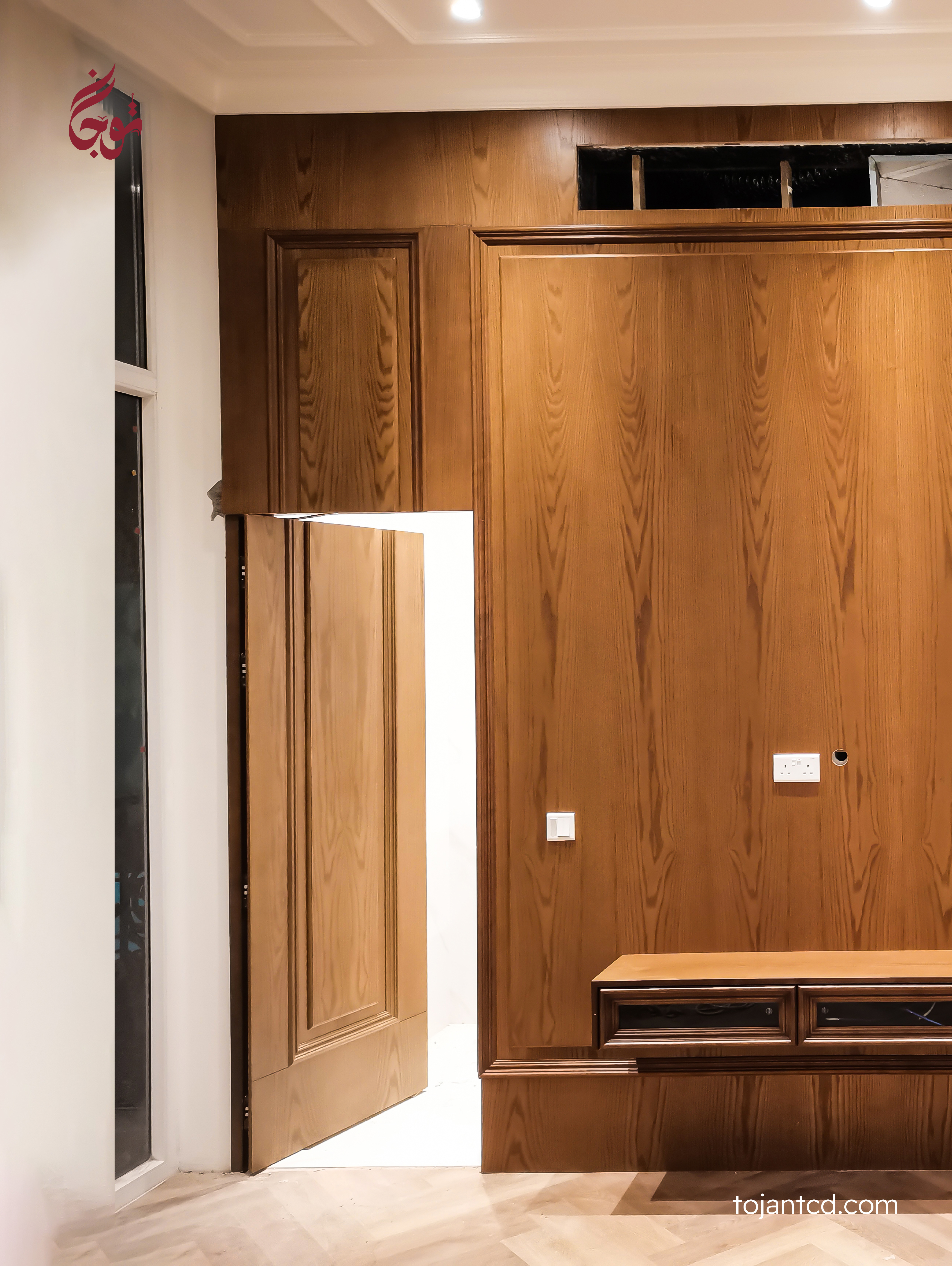
- Flush doors present a clean, unbroken face, perfect for minimalist interiors and concealed or jib doors that blend into a wall.
If you are planning interior joinery alongside your doors, our walk-in wardrobe ideas for modern homes shows how matching wood tones across doors and storage creates a cohesive, high-end look.
Finishes that survive UAE heat and humidity
The finish is the door's skin, and in Abu Dhabi it has to fight UV bleaching on sun-facing entrances and moisture swings near kitchens and bathrooms. A good finish keeps the timber stable, easy to clean and looking new for years.
- PU (polyurethane) lacquer — a tough, sealed film that resists scratches and moisture, available in matte to high gloss; the workhorse for interior doors.
- UV-resistant exterior coatings — essential for any door that catches direct sun, to slow fading and surface checking.
- Penetrating oils — bring out grain depth and are easy to spot-repair, but need periodic reapplication on exterior doors.
- Stains and tinted lacquers — let you deepen or shift the natural tone while keeping the grain visible.
Always confirm that exterior doors are sealed on all six surfaces, including the top and bottom edges. Unsealed edges are the most common entry point for moisture and the usual cause of a door that swells and sticks after a humid spell.
Hardware, security and sound
A beautiful slab is only as good as the ironmongery that carries it. For a heavy custom entrance, hardware is a structural decision, not an afterthought.
- Specify heavy-duty hinges or a quality pivot system rated well above the door's actual weight.
- Choose a multi-point lock for main entrances to improve both security and the seal against dust and heat.
- Add weather seals and a threshold to keep fine desert dust and conditioned air where they belong.
- Consider an acoustic core for bedroom and majlis doors if quiet matters to you.
Match handle and lock finishes to the rest of your home so the door reads as part of a designed whole rather than a separate purchase.
What custom wooden doors cost in Abu Dhabi
Pricing varies widely because every element is a choice, but understanding the cost drivers helps you set a realistic budget and avoid surprises.
- Species — walnut and teak sit at the top; oak and engineered cores offer strong value.
- Size and weight — taller and wider slabs need stronger cores and hardware, which raises cost.
- Carving and detail — hand-carved relief is labour intensive and priced accordingly.
- Finish and hardware — premium locks, pivots and multi-coat finishes add meaningful value and durability.
- Installation — proper frame fitting and alignment is part of a quality door's lifespan, not an extra to cut.
The most reliable way to plan is to share your openings, preferred style and timeline and let a maker price it precisely. You can request a quote and get a clear breakdown rather than a vague estimate.
How to commission your doors, step by step
A smooth bespoke project follows a predictable path. Knowing the sequence keeps the work on schedule and the result faithful to what you pictured.
- Brief and inspiration — gather references, note your style and tell the maker how each door will be used.
- Site survey — every opening is measured precisely, since custom doors are built to the millimetre.
- Design and material selection — confirm species, construction, finish and hardware, ideally with physical samples.
- Quotation and approval — review a detailed quote and a clear lead time before production starts.
- Fabrication — the slab, frame and finish are built and cured in a controlled workshop.
- Installation — trained fitters hang, align and seal the door so it swings true and closes cleanly.
Working with a single team across design, build and installation, as we do at Tojan, keeps accountability in one place and protects the quality of the final result.
Frequently asked questions
Do solid wood doors warp in the Abu Dhabi climate?
They can if the timber is poorly seasoned or the door is left unsealed on its edges. The risk is controlled by choosing a stable species, properly kiln-dried wood, an engineered core for large slabs, and a finish applied to all six surfaces. A well made door from an experienced maker stays flat for decades.
What is the best wood for an exterior front door in the UAE?
Teak is the traditional first choice because its natural oils resist sun and moisture. Sapele and iroko are strong, more affordable alternatives, and an engineered core with a solid hardwood face often performs best of all for tall entrances exposed to direct sun.
Is a pivot door practical for a family home, or just for show?
Pivot doors are very practical for large, heavy slabs because the pivot hardware carries the weight far better than side hinges. They open smoothly with a light push and make a strong entrance statement, which is why they are popular for modern Abu Dhabi villas.
How long does a custom wooden door take to make?
Most bespoke doors take a few weeks from approved design to installation, depending on species availability, the amount of carving, and the finish. Sharing your timeline early lets the workshop schedule fabrication around it. You can discuss lead times when you request a quote.
How do I care for my wooden doors once installed?
Wipe with a soft, slightly damp cloth and avoid harsh chemical cleaners that strip the finish. Keep the AC reasonably consistent to limit movement, check exterior seals once a year, and reapply oil finishes when they start to look dry. With light upkeep, a quality door looks new for many years.
Planning a bespoke piece?
Tell us about your space and we'll turn it into something worth keeping.
Request a quote