Process
What to Expect When Working with a Custom Joinery Workshop
Tojan TCD7 min read
Commissioning bespoke woodwork is not like buying off a showroom floor. When you engage a custom joinery workshop, you are starting a collaboration that turns raw timber into doors, kitchens, wardrobes, and majlis interiors built to the exact millimetre of your villa. Many first-time clients in Abu Dhabi feel unsure about the journey: how long it takes, what questions to ask, and how the desert climate shapes every decision. This guide walks you through the full bespoke woodwork process, so you arrive at your first meeting with Tojan TCD knowing exactly what to expect. You can review our services or browse completed projects as you read.
What a Custom Joinery Workshop Actually Does
A custom joinery workshop designs, manufactures, and installs woodwork made to order for a specific space. Unlike a furniture retailer, nothing is pre-made. Every door leaf, cabinet carcass, and timber panel is cut, jointed, and finished to drawings produced for your home alone. This is what separates true carpentry in Abu Dhabi from flat-pack assembly: control over material, joinery method, dimensions, and finish.
The work typically falls into a few categories, and a good workshop handles all of them under one roof so the detailing stays consistent across your home:
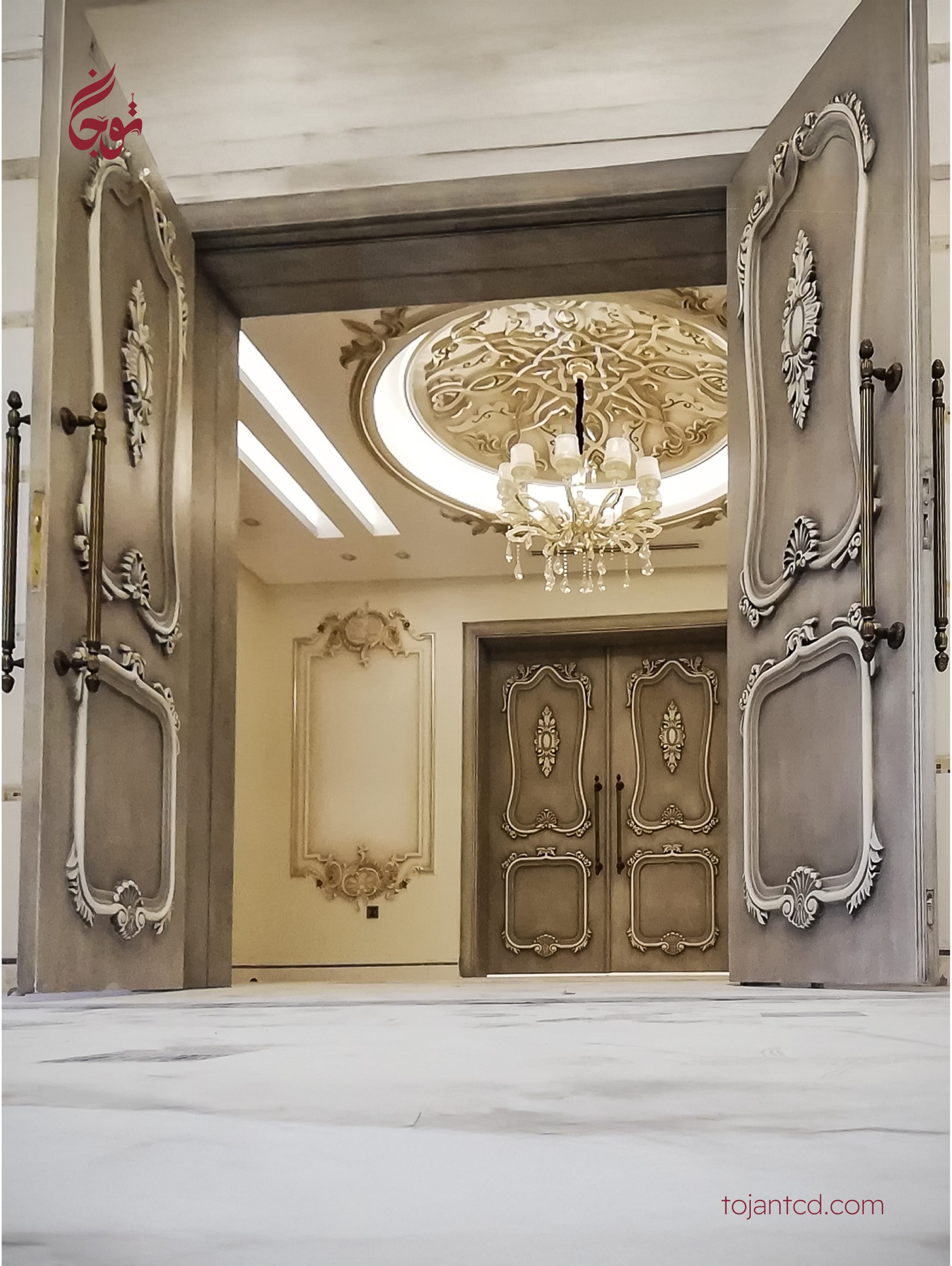
- Custom entrance and internal doors, including pivot and double-leaf designs
- Luxury kitchens with bespoke cabinetry and integrated appliances
- Walk-in wardrobes and fitted storage
- Majlis paneling, seating joinery, and feature walls
- Freestanding and built-in furniture, plus decorative timber elements
The Bespoke Woodwork Process, Step by Step
Understanding the sequence removes most of the anxiety. A well-run bespoke woodwork process moves through clear stages, and you sign off at each gate before work continues:
- Discovery and site visit: we measure the space, discuss how you live, and note light, sightlines, and adjacent finishes.
- Concept and material selection: we propose timber species, finishes, hardware, and layout options.
- Detailed shop drawings: precise technical drawings you approve before any cutting begins.
- Sample approval: physical finish and timber samples so colour and sheen are confirmed in your own lighting.
- Workshop fabrication: components are machined, jointed, and finished in a controlled environment.
- Quality check and dry assembly: pieces are test-fitted before they leave the workshop.
- Delivery and on-site installation: trained fitters install and make final adjustments.
- Handover and snagging: we walk the finished work with you and resolve any final details.
Skipping the drawing and sample stages is the single most common cause of disappointment. Insist on both. The few extra days they take protect months of fabrication.
Choosing the Right Timber for the UAE Climate
Abu Dhabi puts wood under real stress. Outdoor temperatures swing high, indoor spaces are heavily air-conditioned, and humidity near the coast is significant. Timber naturally expands and contracts as it gains and loses moisture, so species choice and moisture control matter more here than in milder climates.
For most interior joinery we favour stable, well-seasoned hardwoods and engineered cores that resist movement. Oak and walnut are popular for their grain and durability, while engineered substrates with quality veneers give large doors and cabinet runs dimensional stability.
- Specify kiln-dried timber acclimatised to indoor conditions before installation
- Use engineered cores for tall wardrobe and door panels to limit warping
- Allow expansion gaps in framing details rather than fixing everything rigid
- Reserve solid timber for elements where movement can be managed, such as frames and trims
Designing for Villas, Majlis, and Open-Plan Living
Emirati and expatriate villas in Abu Dhabi share certain spatial habits: a formal majlis for receiving guests, generous ceiling heights, and open-plan family areas. Bespoke joinery is what lets these spaces feel coherent rather than furnished piece by piece.
In the majlis, full-height paneling and integrated seating joinery create a calm, continuous backdrop. For open-plan kitchens that face the living area, we treat cabinetry as furniture: handleless fronts, concealed appliance housings, and matched veneers that read as one design. Tall villa ceilings reward floor-to-ceiling wardrobes and doors, which look intentional rather than leaving an awkward gap above. For more on coordinating these elements across a whole home, see our interior fit-out guide.
Living with Air Conditioning and Humidity
The AC question comes up in almost every consultation. Constant air conditioning keeps indoor humidity low and fairly stable, which is good for timber, but problems appear in transition zones: entrance doors exposed to outdoor heat on one face and cool air on the other, or rooms left unconditioned for long periods while owners travel.
- Specify robust, moisture-resistant finishes on door faces that meet the outside environment
- Keep villas minimally conditioned during long absences rather than fully off, to avoid humidity spikes
- Choose engineered cores for entrance doors so the leaf stays flat despite the temperature gradient
- Maintain consistent indoor conditions for the first weeks after installation while finishes fully cure
Quality joinery accounts for these realities in the detailing. Ask any workshop how their doors are built to handle the inside-outside temperature difference; the answer tells you a great deal about their experience in this market.
Timelines, Lead Times, and What Drives Them
Bespoke work takes time because it is made for you, not pulled from stock. A realistic expectation for a full luxury kitchen or a set of custom doors is several weeks from approved drawings to installation, with larger whole-villa projects running longer. The clock effectively starts once you sign off the shop drawings and samples, not at the first meeting.
Lead times stretch when:
- Material or hardware selections change after drawings are approved
- Imported veneers or specialty fittings need to be sourced
- Site readiness slips, such as walls, flooring, or MEP work not being complete
- Approvals are delayed at the sample or drawing stage
The best way to protect your timeline is to make decisions early and resist mid-fabrication changes. Bring inspiration images, finishes you like, and a clear sense of how you use each room to the first meeting.
Understanding Cost and Where Your Money Goes
Custom joinery is priced on material, complexity, finish, and hardware, not on a per-unit catalogue rate. A handleless luxury kitchen with soft-close mechanisms and a book-matched veneer will sit at a different level than a simpler painted run. Understanding the drivers helps you invest where it shows.
- Timber and veneer grade: rarer species and matched grain cost more
- Hardware: branded hinges, runners, and lift systems add cost but add years of smooth use
- Finish: hand-applied lacquers and multi-stage finishes take more labour
- Complexity: curves, integrated lighting, and concealed details require more workshop hours
A trustworthy workshop gives you an itemised quotation so you can see these choices and adjust the specification to your budget rather than receiving one opaque figure.
How to Get the Best Result from Your Workshop
Clients who are happiest at handover tend to do the same things during the project. None of them require expertise, only engagement.
- Share how you actually live, not just images you admire, so storage and layout fit your routine.
- Approve samples in your own home lighting, since showroom light flatters differently.
- Read the shop drawings carefully and ask about anything unclear before fabrication.
- Keep the site on schedule so installation is not delayed by unfinished trades.
- Raise concerns early; small adjustments are easy before finishing, costly after.
If you are also planning a kitchen, our overview of luxury kitchen trends for 2026 pairs well with this guide. When you are ready to discuss your project, contact Tojan TCD and we will arrange a site visit.
Frequently asked questions
How long does custom joinery take in Abu Dhabi?
Most projects run several weeks from approved shop drawings to installation. A full luxury kitchen or set of custom doors usually takes longer than a single wardrobe, and whole-villa fit-outs are longer still. The timeline begins once you sign off drawings and samples, so making decisions early keeps the schedule on track.
Is solid wood or engineered timber better for the UAE climate?
Both have a place. Engineered cores with quality veneers are more stable for tall doors and large wardrobe panels, which matters given Abu Dhabi humidity and heavy air conditioning. Solid timber is excellent for frames, trims, and smaller elements where movement can be managed. We specify each where it performs best.
Can I see samples before committing?
Yes, and you should. A reputable custom joinery workshop provides physical timber and finish samples for approval before fabrication. Always view them in your own home lighting, because showroom light changes how colour and sheen appear.
Will custom kitchens and doors warp with the AC running constantly?
Properly specified joinery should not. Constant air conditioning actually keeps indoor humidity stable, which suits timber. The real risk is transition zones such as entrance doors, which is why we use engineered cores and moisture-resistant finishes on faces exposed to outdoor heat.
How is bespoke woodwork priced?
By material grade, hardware, finish, and complexity rather than a fixed catalogue rate. Veneer choice, branded mechanisms, hand-applied lacquers, and details like integrated lighting all affect cost. We provide an itemised quotation so you can adjust the specification to your budget.
Planning a bespoke piece?
Tell us about your space and we'll turn it into something worth keeping.
Request a quote